
Blog
What to do when your key breaks off in the lock
You come home to your house in Yonkers or White Plains after a long day. You slide your key into the deadbolt, turn it, and hear a sickening snap. Half the key is in your hand, and the other half is stuck deep inside the keyway. Your door is still locked, and you are stuck outside. Knowing exactly what to do when your key breaks off in the lock can save you from a ruined evening, expensive repairs, or damaging your door frame out of frustration. It is a common emergency that happens when brass keys wear down over years of turning tight locks. Before you panic or grab a heavy hammer, take a deep breath. There are safe, practical steps you can take right now to address this issue without making the damage worse. Let us walk through how to handle this common headache like a professional.
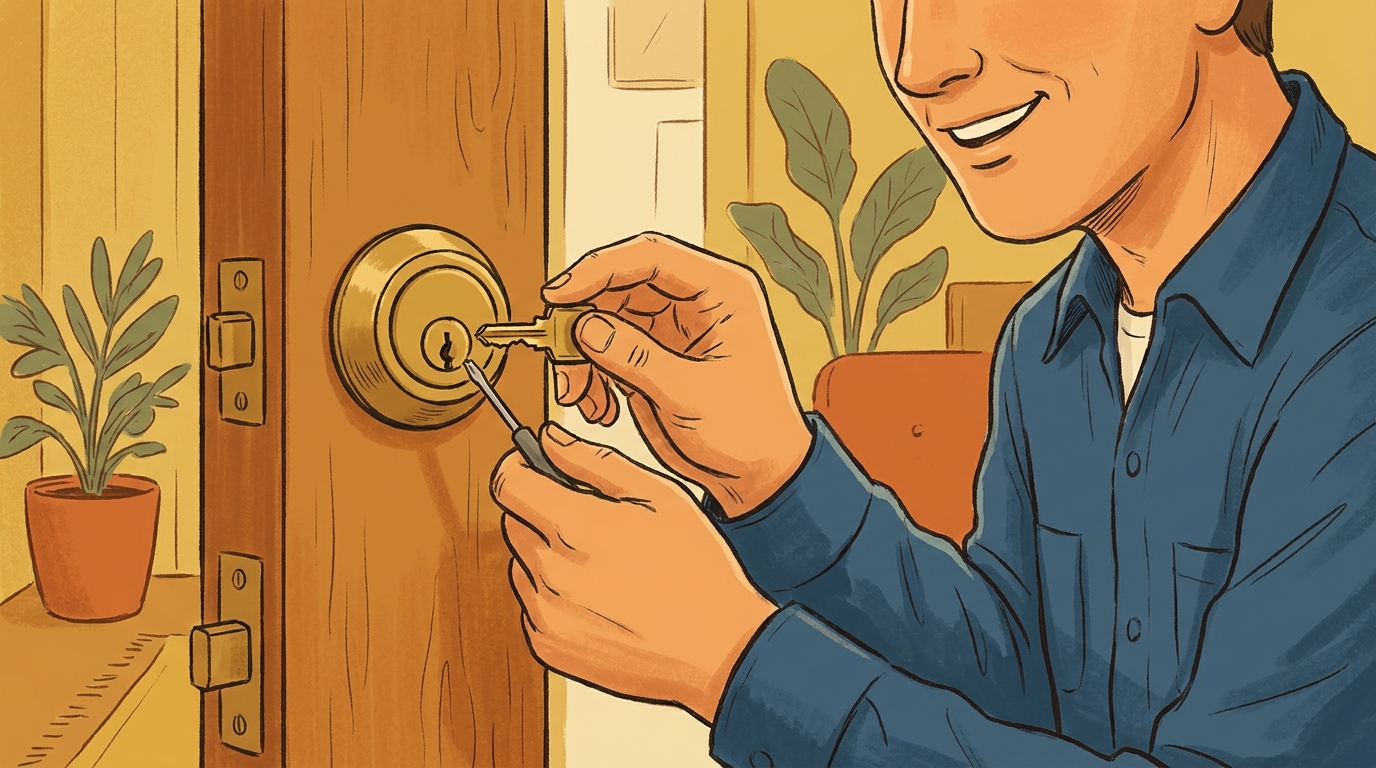
When a key snaps inside your cylinder, acting fast but gently is the key to saving your lock and getting back inside safely.
Why Keys Snap Inside Locks (And How to Prevent It)
Keys do not break without warning. Most of the time, a key snaps because of metal fatigue. Over years of daily use, the brass or nickel-silver alloy of your key develops microscopic cracks, especially at the deepest cuts of the key blade. Every time you twist a stubborn lock, those cracks grow. Eventually, the metal gives way entirely. Another major factor is lock maintenance—or the lack thereof. Inside your lock cylinder, tiny pins and springs rely on smooth movement. Over time, dust, dirt, and moisture from Westchester's humid summers and freezing winters build up inside the keyway. This grime creates friction. If you have to wiggle, force, or push your key with extra pressure just to turn the deadbolt on your Mount Vernon home, that is a clear warning sign. The lock needs lubrication, or the cylinder is failing. Additionally, using the wrong key by mistake or trying to turn a lock that is already jammed can instantly snap the metal. When you feel resistance, stop turning. Forcing the key is the number one reason people end up holding a broken piece of metal. Understanding these factors helps you prevent future lockouts and keeps your home secure.
- Metal Fatigue: Daily twisting weakens the narrowest cuts on your key over time.
- Lack of Lubrication: Dry pins create friction, requiring more force to turn the plug.
- Misaligned Doors: When a door sags, the deadbolt rubs against the strike plate, putting extra stress on the key.
What to Do Immediately (And What to Avoid)
The moment your key breaks, your natural instinct might be to grab whatever is nearby and try to pry it out. However, the wrong move can turn a simple extraction into a costly lock replacement. First and foremost, do not try to insert the broken half of the key back into the lock to turn it. This is a common mistake that pushes the broken fragment deeper into the cylinder, past the pins, making it almost impossible to extract without taking the entire lock apart. Second, stay away from super glue. Some online DIY guides suggest putting a drop of glue on the broken end in your hand and pressing it against the stuck piece. In reality, this almost always results in glue dripping inside the cylinder, bonding the pins and the broken key to the lock housing forever. If this happens, your only option is to replace the entire lock assembly. Instead, assess how much of the key is sticking out. If you can see even a millimeter of the broken blade protruding from the keyway, you might be able to pull it out yourself. Use a pair of needle-nose pliers or strong tweezers to grip the metal firmly and pull straight out. Do not twist or wiggle it, as this can cause the metal to snap again or bind inside the pins. If the key is flush with the face of the lock, leave it alone and call a professional.
Applying super glue to a broken key is the fastest way to ruin a perfectly good lock cylinder. Keep the glue in your toolbox and call a professional instead.
The Danger of DIY Extraction Tools
You might see cheap key extraction kits sold online, or neighbors suggesting you use a bent paperclip or a jigsaw blade. While these tools can work in experienced hands, they often cause more harm than good for beginners. A paperclip is usually too thick and soft; it will simply push the broken key fragment further back. Jigsaw blades have teeth that can easily damage the delicate internal pins of your lock. If you scratch or bend those pins, the lock will no longer recognize your spare key, even if you manage to get the broken piece out. Professional locksmiths use specialized, ultra-thin extraction tools made of tempered steel that slide alongside the key blade to hook and pull it out without touching the pins. Trying to force makeshift tools into the keyway often turns a simple ten-minute extraction job into a situation where you need a complete lock replacement service to secure your home again.
How a Professional Locksmith Extracts a Broken Key
When you call a local locksmith to your home in Scarsdale or New Rochelle, they bring the right tools and experience to solve the problem quickly. First, the technician will inspect the lock to see where the key is broken. If the lock was turned halfway when the key snapped, the locksmith must first rotate the cylinder back to its neutral, vertical position. Keys can only be extracted when the pins are aligned correctly. Once the cylinder is aligned, the locksmith uses a professional key extractor. These are thin, flexible steel rods with tiny hooks or serrated edges on the end. The locksmith slides the extractor into the keyway alongside the broken key, hooks one of the key's cuts, and gently slides the fragment out. If the key is jammed tightly due to rust or damage, the locksmith may apply a specialized silicone-based lubricant to help it slide out easily. In rare cases where the lock cylinder itself is damaged or worn out, extraction might not be enough. If the internal pins are bent or the housing is cracked, the locksmith will recommend a professional [lock replacement](/services/lock-replacement/) to ensure your home remains secure. Replacing an old, stubborn lock with a fresh, high-quality deadbolt not only solves your immediate problem but also prevents future lockouts. A professional will always explain your options clearly before starting any work, ensuring you get the most reliable and cost-effective solution for your property.
- Step 1: Align the cylinder back to the vertical position so the pins can release the key fragment.
- Step 2: Insert a professional, thin-steel extraction tool alongside the broken key blade.
- Step 3: Hook the teeth of the key and carefully pull the fragment straight out of the keyway.
Alpha Locks & Safe Pro Tip
Pro Tip: Never use WD-40 inside your lock cylinders. It attracts dust and grime over time, creating a sticky paste that eventually jams the pins and leads to broken keys.
Need a locksmith right now?
Our licensed team is on call 24/7 for homes, businesses, and vehicles across Westchester County.
Frequently Asked Questions
Can I use a magnet to pull out a broken key?
No, most residential keys are made of brass, nickel-silver, or aluminum, which are non-magnetic metals. A magnet will not attract the broken key fragment and could scratch your lock face or door hardware.
How much does it cost to extract a broken key?
The cost depends on the complexity of the extraction and whether the cylinder is damaged. A straightforward extraction on a standard lock is highly affordable, but if the lock must be replaced, the cost will include the new hardware. We always provide a clear, upfront estimate before starting.
Will my lock still work after the broken key is removed?
Yes, in the vast majority of cases, a professional extraction does not damage the lock. Once the broken piece is removed, you can use your spare key immediately. However, if the lock was already failing or damaged during DIY attempts, we may recommend a lock replacement.